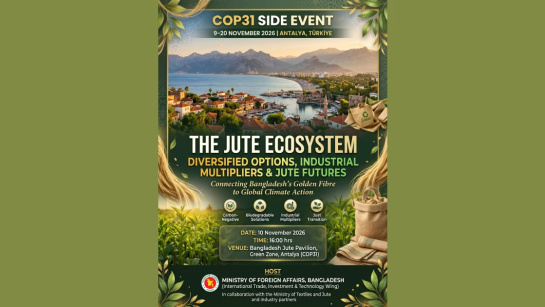
Bangladesh has used the COP31 global climate summit to spotlight its traditional jute industry as a modern, nature-based solution to climate challenges. At the November 2026 conference, the country's delegation highlighted how jute has evolved far beyond its conventional use in hessian and sacks to become a cornerstone of sustainable industrial innovation.
FactaGrid
https://factagrid.com
Environment & Climate
11 November 2026, 2:01 PM
Environment & Climate
Bangladesh showcases jute's climate potential at COP31, demands equitable finance
Bangladesh has presented jute's versatile, eco-friendly applications as a key climate solution at COP31. In a sideline event, the country also called for predictable, grant-based climate finance for developing nations.
11 November 2026, 10:05 AM
|
2 min read
Listening...
Bangladesh showcases jute's climate potential at COP31, demands equitable finance
০০:০০
/
০০:০০
Sources Used
📚 This report is synthesized from the following sources:
Th
The Daily Star
View original article →
Bu
Business Standard
View original article →Leave a comment
Be the first to comment.