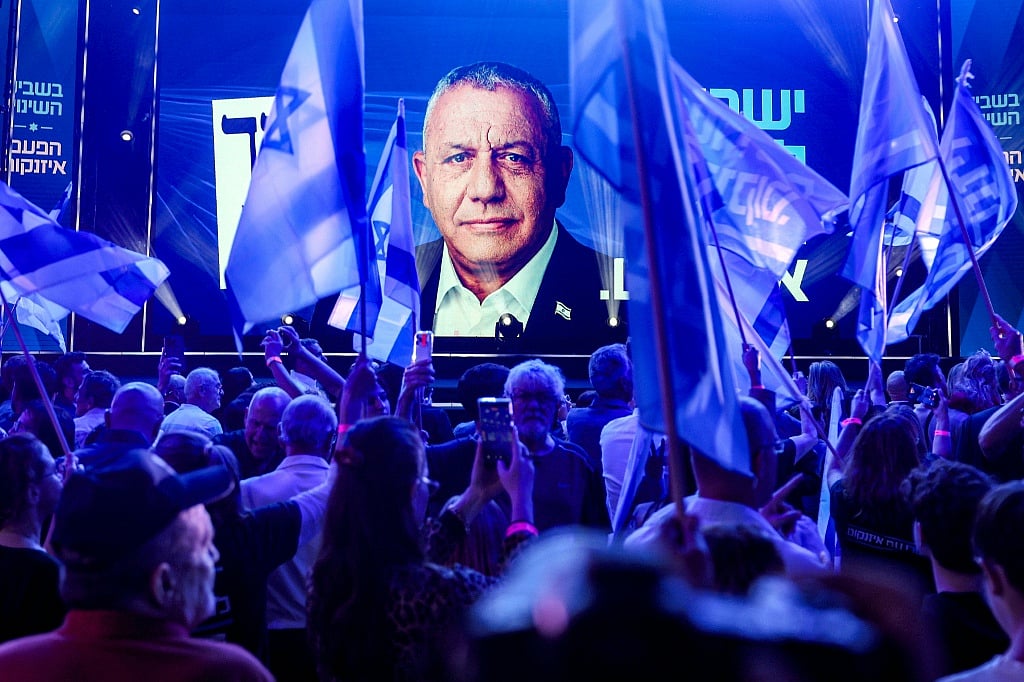
Israel's newly elected 120-member parliament, the Knesset, is being sworn in today, formally initiating the process of forming a new government following the October 27 election. Political analysts suggest that coalition negotiations will enter their final phase immediately after the swearing-in ceremony.
Timeline for Government Formation
Opposition coalition leader Gadi Eisenkot has already begun efforts to build a coalition at the invitation of President Isaac Herzog. Eisenkot, a former army chief turned politician, was formally tasked with forming the government last Sunday. He has been granted 28 days for this purpose, with President Herzog able to extend the deadline by an additional 14 days if necessary.Should Eisenkot succeed in forming a coalition, he must inform the president and the Knesset speaker. A session must then be convened within seven days, during which his government will need to pass a vote of confidence.
Seat Distribution
In the October 27 election, Eisenkot's coalition secured 48 seats. Prime Minister Benjamin Netanyahu's alliance, described by sources as ultranationalist, won 53 seats. With the addition of 19 seats from two Arab parties, Eisenkot's camp would reach 67 seats—exceeding the 61-seat threshold required for a parliamentary majority.Political Significance of the Election
Analysts view the election results through two primary lenses. The first interprets the outcome as a defeat for Prime Minister Benjamin Netanyahu. In the 120-seat Knesset, where his coalition previously held a clear majority, his support has now dwindled to just 53 seats. In contrast, lawmakers opposed to Netanyahu hold 67 seats.Political observers note that had Israel been a truly democratic state, the defeat of an undemocratic force would have sparked celebrations similar to those seen in Hungary, Brazil, or Serbia. However, Israel's political reality differs, where security concerns and regional dynamics play a decisive role in government formation.
All attention now turns to Eisenkot's ability to finalize a coalition and the policy direction of the new government. If he succeeds in forming a government with the support of Arab parties, it would mark a new chapter in Israeli politics.