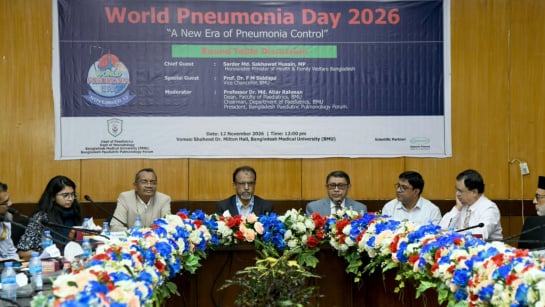
Health experts and officials have called for the establishment of a separate national institute to coordinate diabetes prevention, treatment, and management programs across the country. Speaking at a discussion held in Dhaka on Wednesday, participants said the current fragmented structure lacks coordination among various agencies, creating barriers to patient care.
FactaGrid
https://factagrid.com
Health & Life
13 November 2026, 11:23 AM
Health & Life
Experts Call for Separate Institute to Coordinate Diabetes Prevention and Treatment
Health experts have urged the government to establish a dedicated national institute to coordinate diabetes prevention, treatment, and management programs. The call came at a discussion where concerns were also raised over the near-depletion of government hypertension drug stocks.
13 November 2026, 10:02 AM
|
2 min read
Listening...
Experts Call for Separate Institute to Coordinate Diabetes Prevention and Treatment
০০:০০
/
০০:০০

Sources Used
📚 This report is synthesized from the following sources:
Ne
New Age
View original article →
Ne
New Age
View original article →
Ne
New Age
View original article →Leave a comment
Be the first to comment.