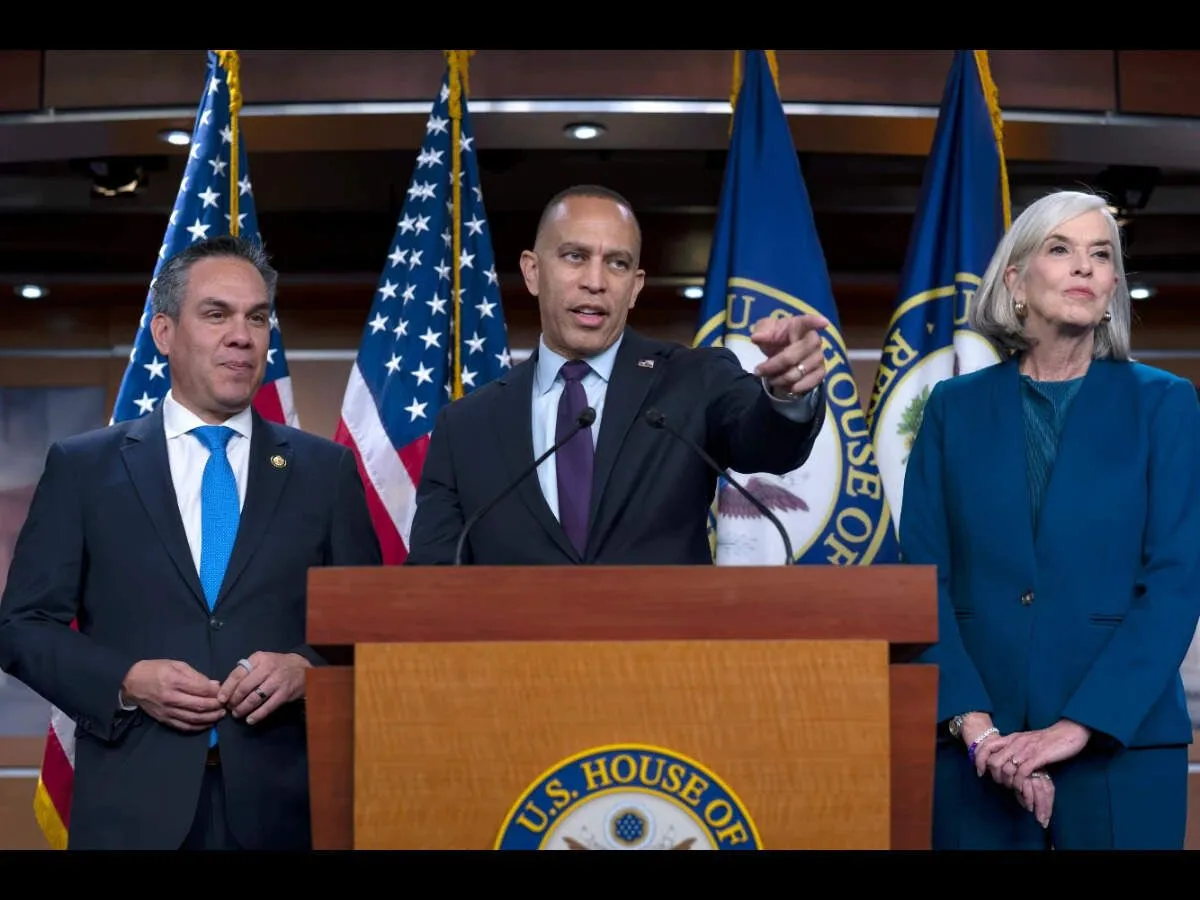
The Democratic Party has taken a historic step toward electing the first Black Speaker of the House in the history of the United States Congress. Political analysts view this initiative as a potential turning point for diversity and representation in the country's political landscape.
FactaGrid
https://factagrid.com
Politics
19 November 2026, 6:58 AM
Politics
⚡ Breaking
Democrats take historic step toward first Black House speaker
The Democratic Party has taken a formal step toward electing the first Black Speaker of the House in US history. The move is being hailed as a landmark moment for political representation in the country.
19 November 2026, 6:09 AM
|
2 min read
Listening...
Democrats take historic step toward first Black House speaker
০০:০০
/
০০:০০
Sources Used
📚 This report is synthesized from the following sources:
Ne
New Age
View original article →
Ne
New Age
View original article →Leave a comment
Be the first to comment.