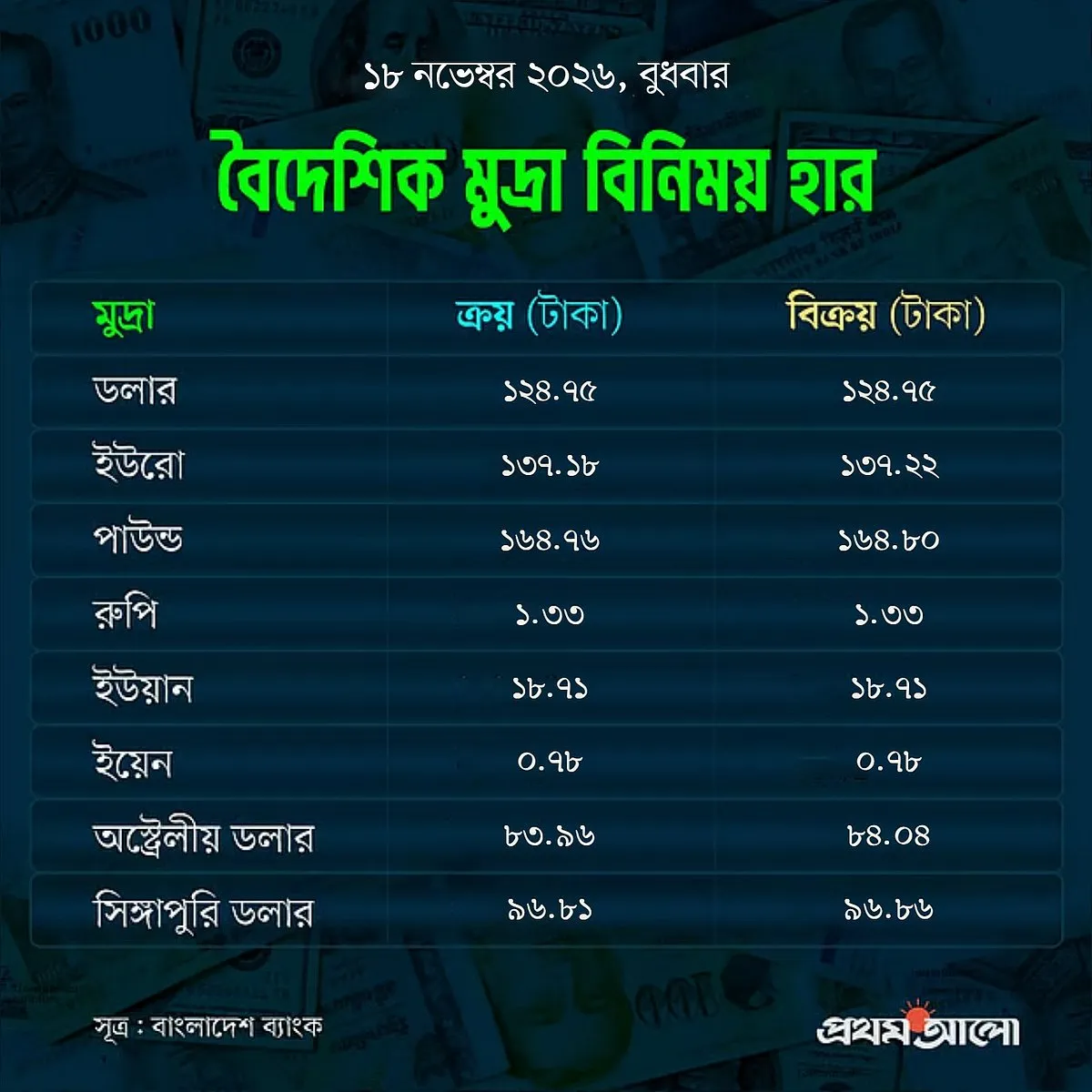
Transactions continued in Bangladesh's currency market on Thursday, the last working day of the week before the Friday-Saturday weekend. The US dollar's rate remained unchanged, holding an average of 124.75 taka, according to data published by Bangladesh Bank.
The central bank publishes daily rates for the major foreign currencies against the taka, figures that banks and businesses follow for import, export and remittance transactions. Fluctuations in these exchange rates directly move the cost of the country's trade and commerce.
The rates have swung for several months, driven by a range of factors including the Middle East crisis, according to the central bank's published accounts. Traders and currency dealers track the daily figures closely as a result.
According to Bangladesh Bank's published data, the average dollar price in the market today stands at 124.75 taka.
Most major currencies decline
Thursday's published data showed most major currencies weakening. The list of declining currencies included the euro, the Australian dollar and the Singapore dollar, while the British pound and the Chinese yuan were shown unchanged. The published breakdown initially listed the pound and the yuan among the currencies whose prices fell, but subsequently showed the rates of both as unchanged.
Mixed trend on Wednesday
The market had shown a mixed trend on Wednesday, the fourth working day of the week. The dollar also held at 124.75 taka that day. The euro, pound, Indian rupee and Singapore dollar had risen, while the yuan, yen and Australian dollar were unchanged.
A comparison of the two days shows the dollar steady across consecutive working days. The euro and the Singapore dollar rose on Wednesday before easing on Thursday.
The Australian dollar slipped after holding firm a day earlier. The pound, which gained on Wednesday, was unchanged on Thursday, while the yuan has now held level for two straight sessions.
Open market rates run higher
Foreign currency sells in the open market at somewhat higher rates than the prices published by the central bank. Buyers purchasing foreign currency for personal needs therefore pay more than the officially published rate.
Bangladesh Bank will publish an updated list of exchange rates on the next working day after the weekly holidays. The central bank's accounts attribute the fluctuations of recent months to factors including the Middle East crisis.