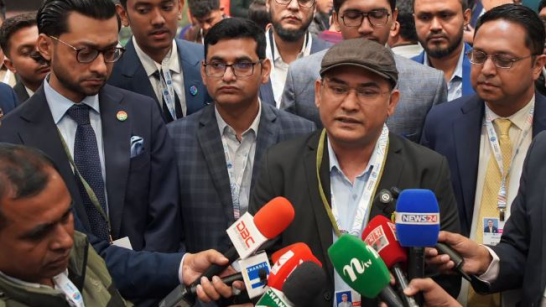
Bangladesh has formally urged the international community to provide low-interest, long-term financing and fair trade benefits for implementing green industrialisation at the COP31 climate summit. The country's delegates emphasised the need for accessible technology and funding to establish carbon-neutral industrial facilities in developing nations.
FactaGrid
https://factagrid.com
Environment & Climate
12 November 2026, 4:34 PM
Environment & Climate
Bangladesh seeks low-interest long-term financing, fair trade benefits for green industrialisation
Bangladesh has called for low-interest long-term financing and fair trade benefits to support its green industrialisation efforts at the COP31 climate summit. The country's industrial facilities currently have over 600 megawatts of rooftop solar power capacity.
12 November 2026, 3:25 PM
|
2 min read
Listening...
Bangladesh seeks low-interest long-term financing, fair trade benefits for green industrialisation
০০:০০
/
০০:০০
Sources Used
📚 This report is synthesized from the following sources:
Dh
Dhaka Tribune
View original article →
Bu
Business Standard
View original article →Leave a comment
Be the first to comment.