Two weeks after Israel's parliamentary election, the country's political landscape has entered a new phase of uncertainty. President Isaac Herzog has formally tasked opposition leader Gadi Eisenkot with forming a government. However, neither Eisenkot's alliance nor Prime Minister Benjamin Netanyahu's bloc commands the 61 seats required for a majority in the Knesset, leaving the question of the next government unresolved.
FactaGrid
https://factagrid.com
National
12 November 2026, 4:28 PM
National
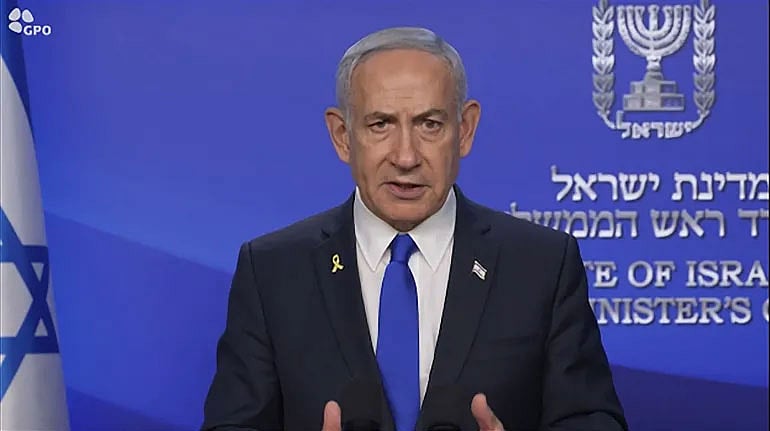
Netanyahu Faces Power Loss Fear, Warns of Civil Strife
Amid Israel's post-election government formation deadlock, analysts suggest Prime Minister Benjamin Netanyahu may leverage ongoing conflicts, including the Iran war, to retain power. Opposition leader Gadi Eisenkot is negotiating to form a government, but neither bloc holds the required 61 seats.
12 November 2026, 3:13 PM
|
2 min read
Listening...
Netanyahu Faces Power Loss Fear, Warns of Civil Strife
০০:০০
/
০০:০০
Sources Used
📚 This report is synthesized from the following sources:
Pr
Prothom Alo
View original article →
Ba
Bangladesh Pratidin
View original article →Leave a comment
Be the first to comment.
