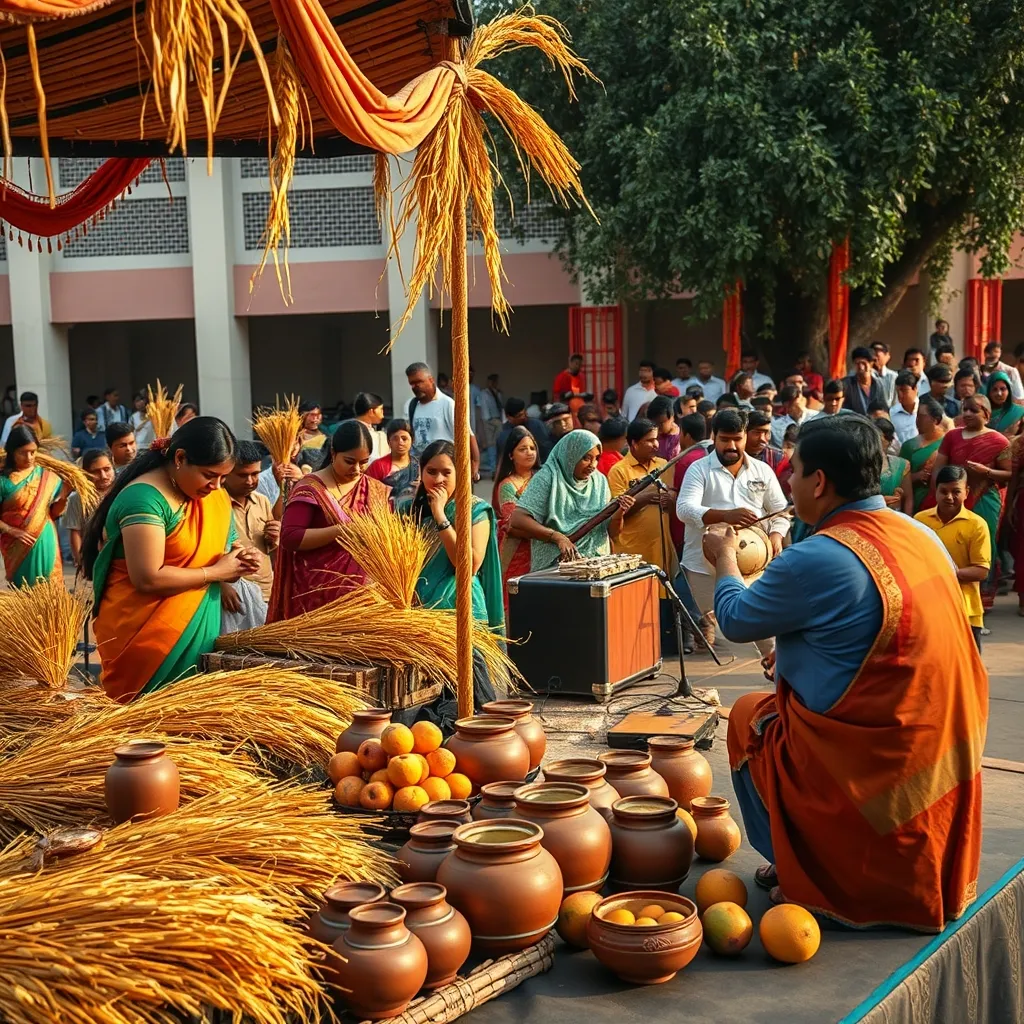
Nabanna, the centuries-old Bengali harvest festival marking the arrival of newly harvested rice, has been celebrated at Rajshahi University (RU) campus, according to a report published by daily Bangladesh Pratidin on Monday (16 November). The celebration comes as the Bengali month of Agrahayan opens across the country with the harvest of Aman paddy.
"Nabanna festival at RU", read the headline of the Bangladesh Pratidin report.
The tradition of Nabanna
Nabanna, literally meaning "new rice" or "new grain", is among the oldest agrarian folk festivals of Bengal. Traditionally observed at the start of Agrahayan, it celebrates the harvesting of the Aman crop.
Festivities typically feature dishes prepared from the new harvest, including payesh and pithas, alongside folk songs, dance recitals and displays of rural Bengali life. In Dhaka, Bangla Academy and other cultural organisations stage large-scale celebrations every year, while student groups at universities across the country organise similar events on campus.
Festivities on campus
The Pratidin report confirmed that the festival was observed at Rajshahi University. Student cultural bodies have traditionally arranged such celebrations on the campus, and the events usually feature folk music, dance and exhibitions of new rice and homemade sweets, drawing teachers, students and campus residents together. University-based Nabanna observances have long served as a platform for carrying the agrarian heritage of Bengal to a new generation.
Celebrations at BRRI
In a separate report published the same day, Bangladesh Pratidin said the festival was celebrated with a variety of arrangements at the Bangladesh Rice Research Institute (BRRI). For the country's premier rice research body, the festival carries particular significance, as researchers and staff mark the harvest season of the crop at the centre of their work.
A living heritage
Nabanna has remained equally vibrant in rural Bengal and in urban cultural arenas, and this year's observances at RU and BRRI reflect that continuity, according to the reports. The festival stands as one of the enduring markers of Bangladesh's agrarian roots, sustained each year through campus events, institutional celebrations and community gatherings.