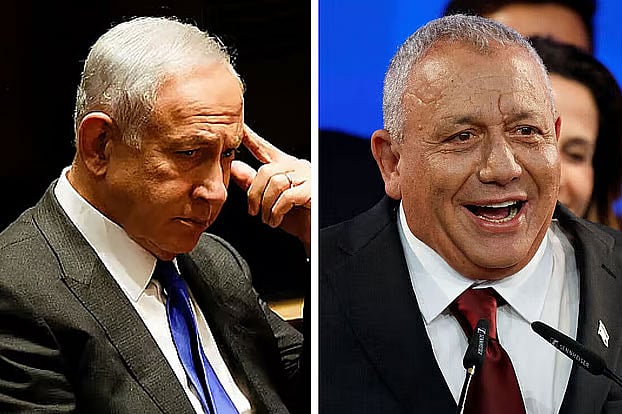
Gadi Eisenkot, leader of Israel's opposition bloc and the mandate-holder tasked with forming a new government, said on Sunday that Prime Minister Benjamin Netanyahu could no longer stay in office after reports linked the premier's office to interference in the country's latest election. "Benjamin Netanyahu cannot remain at the head of the government even for a minute," Eisenkot said while launching a direct attack on his rival, just a day after representatives of the two leaders had sat down for talks.
The escalation marks a sharp turn in Israel's post-election political maneuvering, where no bloc secured the required majority to govern.
A Deadlocked Vote and a Mandate
In Israel's general election held on October 27, no bloc managed to secure the majority needed to form a government. The country's president subsequently handed Eisenkot the responsibility of building a new coalition. It was during that process, aimed at breaking the deadlock, that negotiations between his bloc and Netanyahu's party over a possible national unity government had begun.
A Sharp Message on X
In a post on the social media platform X, Eisenkot described the conduct of the outgoing prime minister and his inner circle as a danger to Israeli democracy.
"The activities of outgoing Prime Minister Netanyahu and his inner circle pose a real, direct and immediate threat to Israel's democracy," he wrote.
Eisenkot's declaration, made only hours after his representatives met with Netanyahu's team, effectively casts doubt on the viability of the unity-government track. Analysts say the interference allegations have deepened the trust deficit between the two camps and could further narrow the path out of the impasse.
The Far-Right Equation and the Gaza Question
The electoral map adds another layer of complexity. Moshe Feiglin, once regarded as firmly far-right, was elected to Israel's parliament, the Knesset, in last month's vote after allying with far-right Finance Minister Bezalel Smotrich. In May, Feiglin made a controversial statement that drew widespread condemnation.
"Every child in Gaza, every newborn is our enemy," he said at the time.
His entry into the Knesset alongside such rhetoric underscores how the government-formation equation has hardened, and the question remains whether a change at the top would alter the trajectory in Gaza at all.
What Comes Next
Attention now turns to whether Eisenkot can demonstrate a parliamentary majority within the established process for forming a government. The interference allegations against the prime minister's office, and Eisenkot's uncompromising response to them, are set to dominate coalition negotiations in the coming days. It was not immediately clear whether the Netanyahu camp had responded to the allegations or to Eisenkot's statement.