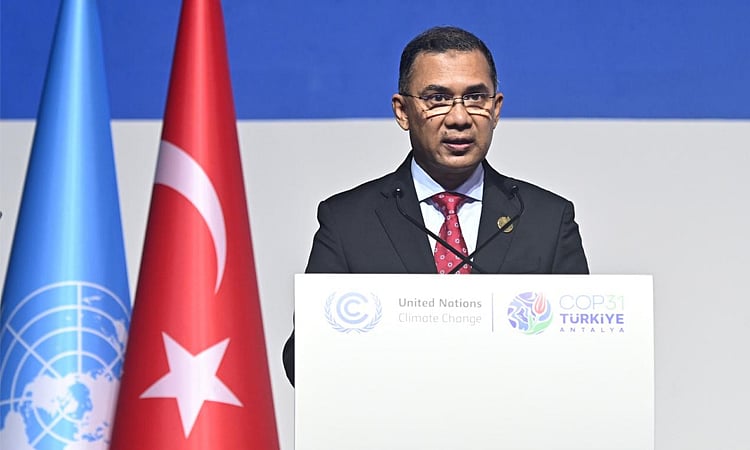
The Prime Minister has called for five urgent actions to address the global climate crisis, placing the proposals before the international community. The framework for these proposals is rooted in the principle of 'Common but Differentiated Responsibilities and Respective Capabilities' (CBDR-RC).
FactaGrid
https://factagrid.com
Environment & Climate
12 November 2026, 9:09 PM
Environment & Climate
PM outlines five actions to address needs of climate-vulnerable countries
The Prime Minister has placed five urgent proposals before the international community to tackle the global climate crisis, guided by the principle of 'Common but Differentiated Responsibilities and Respective Capabilities'. These actions aim to address the specific needs of climate-vulnerable nations.
12 November 2026, 7:03 PM
|
2 min read
Listening...
PM outlines five actions to address needs of climate-vulnerable countries
০০:০০
/
০০:০০
Sources Used
📚 This report is synthesized from the following sources:
Ba
Bangladesh Pratidin
View original article →
Bu
Business Standard
View original article →Leave a comment
Be the first to comment.