Experts believe that continuing humanitarian assistance alone is not enough to reach a durable solution to the Rohingya crisis. They have recommended expanding education, skills development and livelihood opportunities for Rohingyas in the camps, alongside efforts to create an environment for their safe and dignified repatriation. Emphasis was also placed on improving employment and living standards for the affected local population.
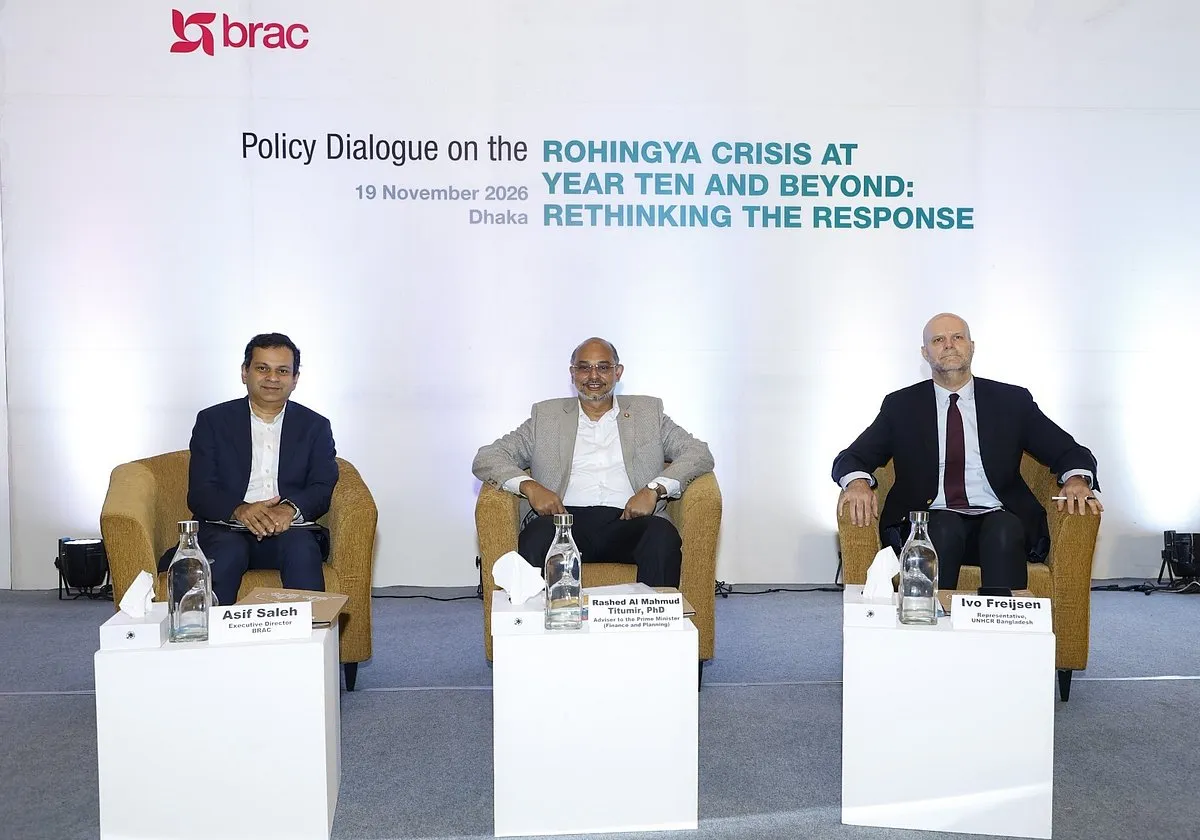
The remarks were made at a policy dialogue titled "A Decade of the Rohingya Crisis: New Thinking on the Way Forward," held at a hotel in the capital on Thursday. The dialogue was organized by BRAC.
Chief Guest's Remarks
Adviser to the Ministry of Finance and Planning, Rashed Al Mahmud Titumir, attended the event as the chief guest. Speaking at the dialogue, he said the solution to the Rohingya crisis must be found in Myanmar. He stressed the need to restore the political rights of Rohingyas and create an environment for their safe and dignified return.Experts observed that as the crisis becomes protracted, opportunities for education and employment in the camps are steadily declining. In this context, coordinated initiatives by the government, the United Nations and development partners have become crucial for creating skills development and livelihood opportunities for the Rohingya population.