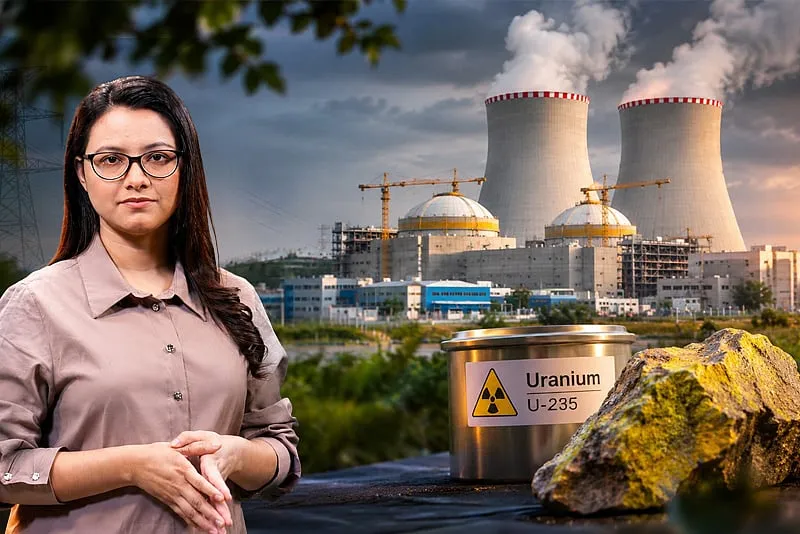
An explanatory video report by Prothom Alo has detailed the step-by-step process of how electricity will be generated from uranium at the Rooppur Nuclear Power Plant. The report also discusses the concept of 'criticality' in nuclear reactors and the potential timeframe for connecting the plant's electricity to the national grid.
FactaGrid
https://factagrid.com
National
17 November 2026, 11:49 AM
National
How uranium will generate electricity at Rooppur Nuclear Power Plant
Prothom Alo has published an explainer detailing how electricity will be generated from uranium at the Rooppur Nuclear Power Plant. The report sheds light on the 'criticality' process of the nuclear reactor and the timeline for connecting the plant's output to the national grid.
17 November 2026, 10:02 AM
|
2 min read
Listening...
How uranium will generate electricity at Rooppur Nuclear Power Plant
০০:০০
/
০০:০০
Sources Used
📚 This report is synthesized from the following sources:
Pr
Prothom Alo
View original article →
Pr
Prothom Alo
View original article →Leave a comment
Be the first to comment.