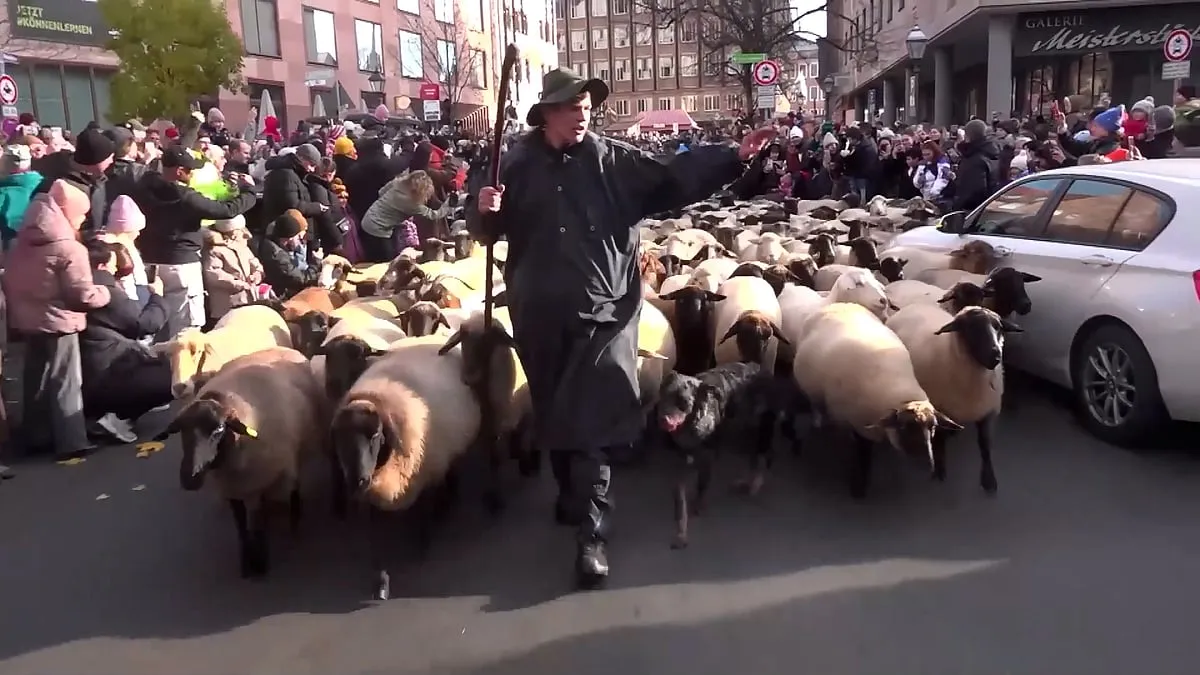
A large flock of hundreds of sheep was seen moving through the streets of Nuremberg, Germany, on Friday, heading toward their winter grazing grounds. The procession is part of a traditional seasonal livestock relocation practice, considered an integral part of the region's agricultural heritage.
A Seasonal Tradition
Every year, before the onset of winter, herders in northern Bavaria guide their flocks through the city to reach winter pastures. This spectacle is a familiar and popular event for local residents and tourists alike. However, this year's march carries a deeper sense of concern.Financial Strain on Herders
According to a report by Prothom Alo, the market price of wool has dropped significantly in recent times. This has placed sheep farmers under severe financial pressure. Additionally, uncertainty surrounding new European Union agricultural subsidy policies has further complicated the situation.A significant portion of herders believe the sector is now facing an existential crisis. With rising costs and falling income, younger generations are showing little interest in taking up the profession. Many farmers have already decided to sell off their flocks.
Tradition Versus Reality
While the Nuremberg procession highlights the city's cultural heritage, it also reflects a harsh economic reality. Local authorities and agricultural organizations have reportedly begun discussions to address the issue. However, no concrete solution or new subsidy package has been announced so far.The sheep procession eventually reached its pasture safely, but the future of the herders remains uncertain. The survival of this traditional profession now depends on agricultural policy decisions and market conditions in the coming months.