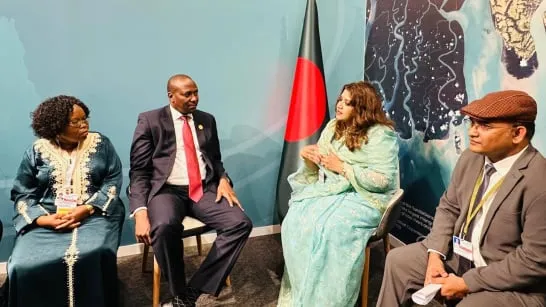
The Prime Minister has placed five proposals to safeguard the interests of countries vulnerable to climate change. She presented the proposals during a high-level session of the climate summit on Thursday (12 November). The proposals re-emphasize the role of developed and industrialized nations in tackling the global climate crisis.
FactaGrid
https://factagrid.com
Environment & Climate
14 November 2026, 7:20 AM
Environment & Climate
PM places five proposals for climate-vulnerable countries
The Prime Minister has placed five proposals at the climate summit for countries vulnerable to climate change. The proposals call on developed nations to cut carbon emissions and ensure funding and technology transfer for affected countries.
14 November 2026, 6:03 AM
|
2 min read
Listening...
PM places five proposals for climate-vulnerable countries
০০:০০
/
০০:০০

Sources Used
📚 This report is synthesized from the following sources:
Ka
Kaler Kantho
View original article →
Ka
Kaler Kantho
View original article →Leave a comment
Be the first to comment.