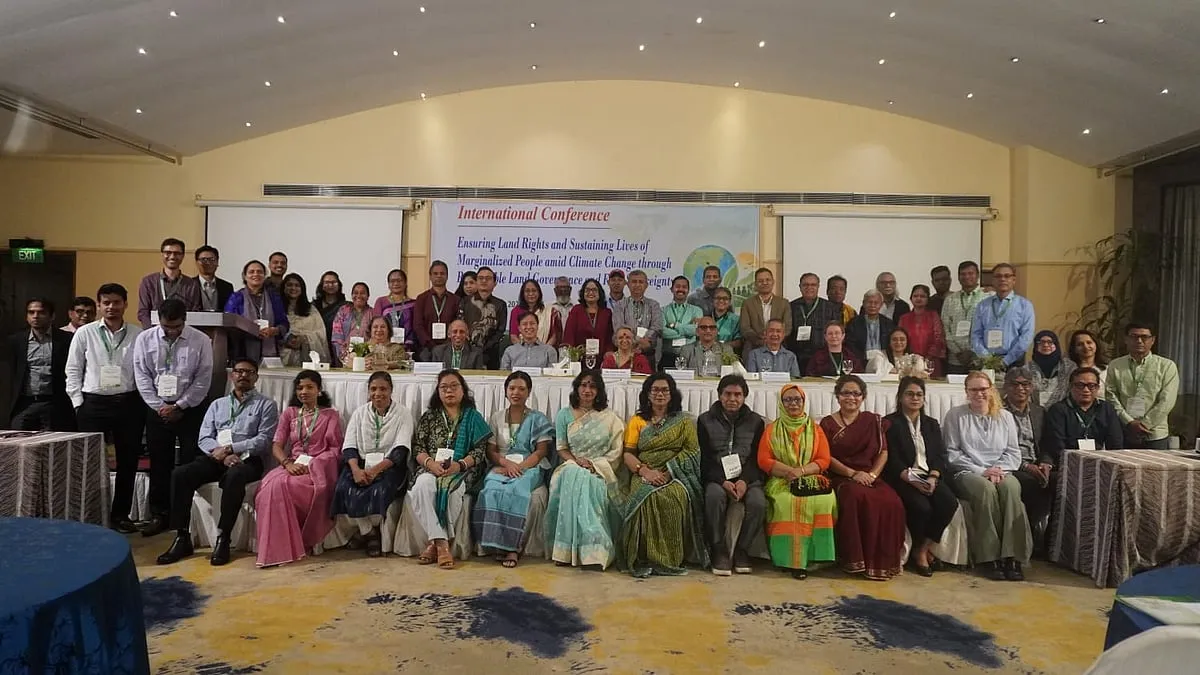
Speakers at an international conference in Dhaka have called for ensuring land rights for smallholder farmers, women and indigenous communities vulnerable to climate change, alongside establishing responsible land governance. They noted that while many countries have laws protecting land rights, implementation remains weak and some laws themselves contain discrimination.
17 November 2026, 12:02 AM
|
2 min read
Climate change is putting the livelihoods and food security of marginalized communities at severe risk. Speakers at an international conference have stressed the need to ensure land rights for smallholder farmers, women and indigenous groups, while also emphasizing responsible land governance and climate-resilient agriculture to address the situation.
The conference, titled "Responsible Land Governance and Food Sovereignty for Establishing Land Rights and Sustainable Livelihoods of Marginalized Communities in Climate Change," was held on Monday at a hotel in Gulshan, Dhaka. It was jointly organized by the Association for Land Reform and Development (ALRD) and the Asian NGO Coalition for Agrarian Reform and Rural Development (ANG).
Gaps in Land Law Implementation
Speakers said that although many countries have laws to protect land rights, in many cases they are not properly implemented. In some instances, discrimination exists within the laws themselves. They argued that ensuring fair access to and ownership of land for marginalized communities is crucial to tackling displacement and asset loss caused by climate change.
Food Sovereignty and Sustainable Livelihoods
The conference emphasized adopting climate-resilient agricultural techniques and formulating effective policies to ensure sustainable livelihoods for marginalized populations. Speakers described land reform and good governance as essential to protecting food sovereignty. They also highlighted the need for special initiatives to secure land rights for women and indigenous communities.