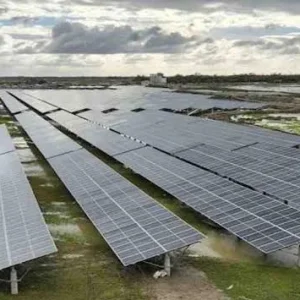
The government of Bangladesh has set a target to meet 20 percent of the country's electricity demand from renewable energy. As part of that goal, it plans to generate 10,000 megawatts of electricity from renewable sources by 2030, according to State Minister for Power, Energy and Mineral Resources Anindya Islam Amit.
Alongside the targets, the country's largest solar power plant is expected to begin operations in June 2028. The announcements were reported on Monday by Bangladesh Pratidin, Samakal and Dhaka Tribune.
"Our target is to generate 10,000 megawatts of electricity from renewable sources by 2030," Anindya Islam Amit, State Minister for Power, Energy and Mineral Resources, told Dhaka Tribune.
Largest solar plant expected in June 2028
Dhaka Tribune reported that Bangladesh's largest solar power plant is expected to begin commercial operations in June 2028. The project was cited in the context of the state minister's 2030 generation target. The plant's commissioning is expected to raise the contribution of renewable sources to the national grid.
Plan for a just transition
Samakal reported that the government has a plan for a just transition to renewable energy. "The government has a plan for a just transition to renewable energy," Saimum Parvez told Samakal. The Samakal report attributed the statement to Saimum Parvez but did not specify his official designation.
Differing attributions across reports
Bangladesh Pratidin attributed the 20 percent renewable target to the state minister without naming him. Dhaka Tribune cited the state minister by name, Anindya Islam Amit, for the 10,000 MW target by 2030.
Samakal, meanwhile, carried the pledge on a just transition under Saimum Parvez's name. All three reports were published on the same day and emphasized the government's renewable energy policy, though the identity of the speakers differs across the reports.
Context and the road ahead
Fossil fuels, including natural gas, have long dominated Bangladesh's power generation mix. The government has repeatedly announced a policy shift toward renewables to reduce reliance on fossil fuels, and Monday's targets were announced against that backdrop. If the 10,000 MW generation target for 2030 is achieved, it would align with the goal of meeting 20 percent of total electricity demand from renewable sources, according to the state minister.
Key markers ahead include whether the largest solar plant starts operations on schedule in June 2028 and how much tangible progress is made toward the 2030 megawatt target. Details on how the "just transition" to renewable energy will be implemented are also awaited. No new timeline or project specifics beyond these announcements were provided in the reports.