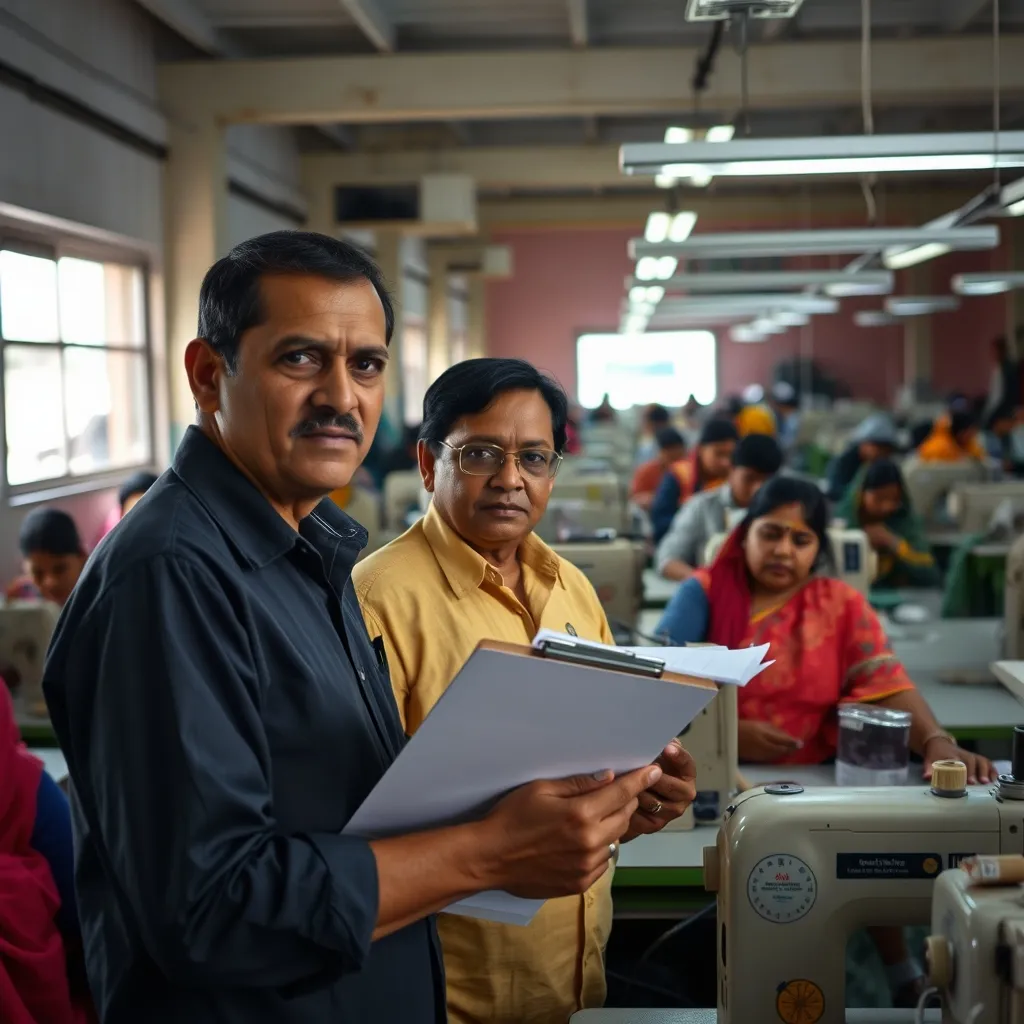
Determining wages in Bangladesh's garment industry has emerged as a significant challenge, requiring a delicate balance between workers' demands and owners' capacity. In this context, stakeholders have urged factory owners to present realistic wage proposals that address workers' needs while ensuring the sector's sustainability.
FactaGrid
https://factagrid.com
Business & Economy
18 November 2026, 3:06 AM
Business & Economy
Owners Urged to Offer Realistic Wage Proposals Amid Balancing Challenge
The challenge of maintaining a balance in wage determination in the garment sector has been highlighted in discussions. Stakeholders have called on owners to come forward with realistic wage proposals.
18 November 2026, 1:03 AM
|
2 min read
Listening...
Owners Urged to Offer Realistic Wage Proposals Amid Balancing Challenge
০০:০০
/
০০:০০
Sources Used
📚 This report is synthesized from the following sources:
Ba
Bangladesh Pratidin
View original article →
Ba
Bangladesh Pratidin
View original article →Leave a comment
Be the first to comment.