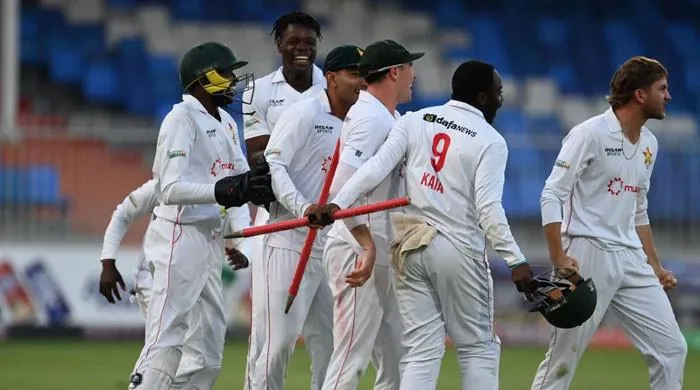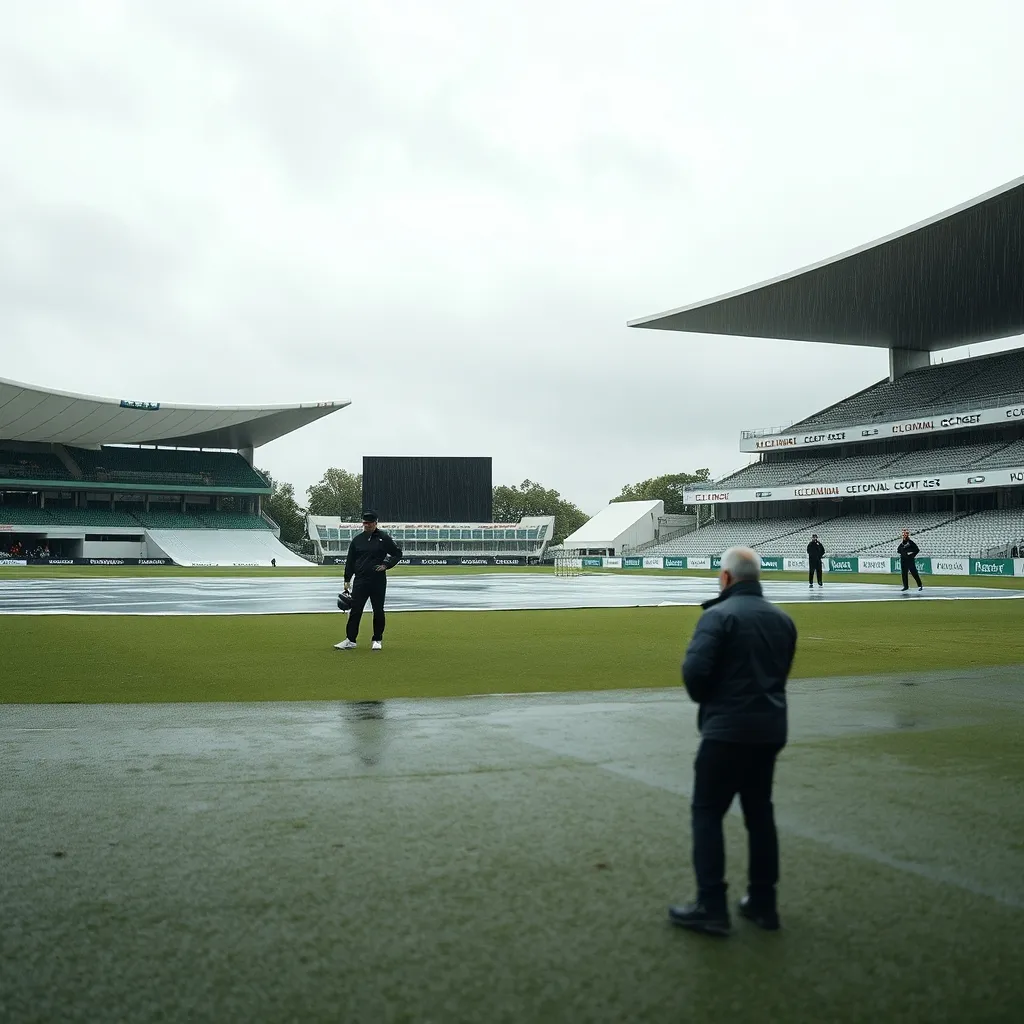
Two sessions of the third day's play in the ongoing Test match in Johannesburg were washed out by rain on Tuesday, November 17. South Africa's score stood at 287 at the close of the second day. Inclement weather denied any opportunity to resume from that position, with no ball bowled before the morning and afternoon sessions were abandoned.
Weather Halts Play
Play was scheduled to begin in the morning session on the third day. Persistent rain and a wet outfield, however, forced officials to call off both the morning and afternoon sessions entirely.
The Dhaka-based daily Jugantor reported, "Both sessions of the third day were washed out by rain." English-language daily New Age confirmed the same development, stating that inclement weather washed out two sessions in Johannesburg. There is no discrepancy between the two outlets on the facts of the interruption.
In Test cricket, each day's play is divided into three sessions: morning, afternoon and evening. Each session normally accounts for roughly 30 overs, against a target of 90 overs per day. Losing two full sessions therefore means approximately 60 overs of play were lost on the third day, a significant blow in the longest format of the game where results depend heavily on accumulated playing time.
The Position at Stumps on Day Two
At the end of the second day's play on Monday, November 16, South Africa's score read 287. Neither the Jugantor nor the New Age reports detailed the number of wickets lost, individual batsmen's scores or bowling figures. As a result, the published accounts do not clarify how many wickets South Africa had lost when play ended, nor whether the innings was still in progress at that stage.
Johannesburg's Unpredictable Conditions
Johannesburg sits roughly 1,700 metres above sea level on the Highveld. November marks the onset of summer in the southern hemisphere, when sudden afternoon and evening thunderstorms are common in the region.
The city's weather is known to change rapidly, frequently disrupting matches staged at its grounds. When rain falls, covers are deployed over the pitch while groundstaff work to restore the outfield to a playable condition.
Result Prospects Narrow
The loss of two sessions in a single day substantially reduces the effective playing time available in the match. If the rain continues into the final session and conditions remain unfavorable on the remaining days, the prospect of a draw increases.
The Laws of Cricket allow for up to 30 minutes of additional playing time per day to make up for lost overs and complete the daily allocation, a provision that can partially offset lost time at the end of a day. However, when the majority of a day is lost, that limited allowance is rarely sufficient to recover the shortfall.
What Lies Next
If conditions improve, groundstaff will begin drying procedures and umpires will assess the outfield before permitting play to resume. Should the final session of the third day go ahead, South Africa will have the chance to build on their position of 287.
A full day's play on Wednesday and Thursday would be required for a result to remain realistically in reach. Detailed scorecards, player performances and both teams' positions will be reported once play resumes and official figures are confirmed.